A New Kind of Attack
In the vast deserts of North Africa, traditional warfare struggled. Front lines were fluid. Distances were immense. And defending every airfield was nearly impossible.
The Special Air Service saw an opportunity.
Instead of fighting the enemy head-on, they would strike where it hurt most—deep behind enemy lines, under cover of darkness.
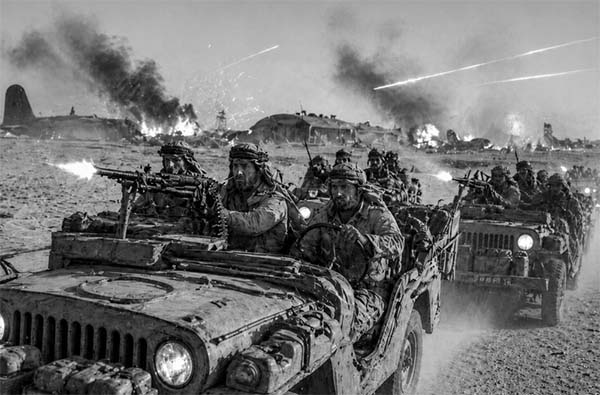
This was the beginning of the SAS jeep raids.
Why Jeeps Changed Everything
At first glance, the vehicle was unremarkable: the American-built jeep.
But in SAS hands, it became something entirely different.
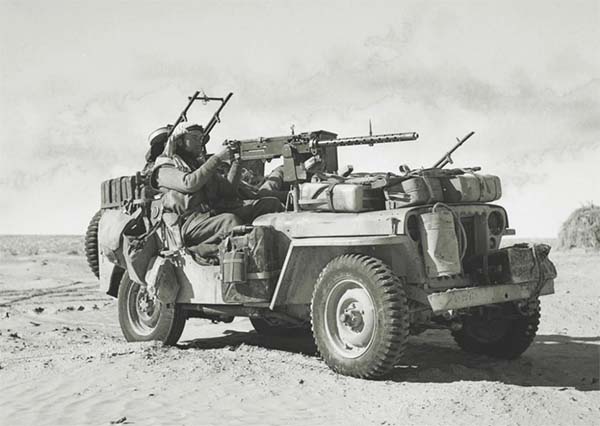
Modified for desert warfare, these jeeps were:
- Fitted with multiple machine guns
- Loaded with extra fuel for long-range missions
- Stripped down for speed and mobility
- Capable of navigating terrain larger vehicles could not
Fast, lightweight, and deadly, they allowed small teams to travel hundreds of miles undetected.
How the Raids Worked
The raids followed a simple but highly effective pattern:
- Approach at night using navigation by stars and compass
- Penetrate enemy airfields silently and quickly
- Destroy aircraft using explosives or gunfire
- Withdraw before dawn, often before the enemy could respond
In just minutes, a small SAS team could destroy dozens of aircraft, crippling enemy operations.
Then they would vanish back into the desert.
Paddy Mayne: Leading from the Front
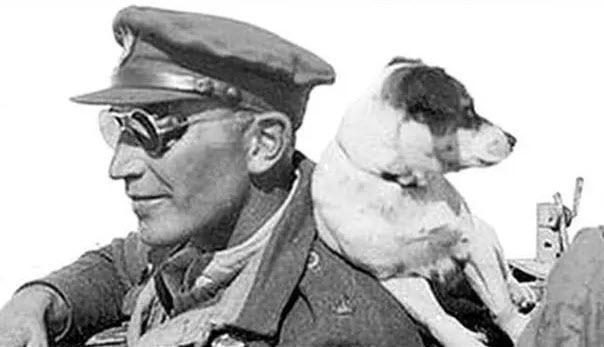
At the center of many of these raids was Paddy Mayne.
He was not a distant commander. He led from the front—often the first onto an airfield and the last to leave.
Accounts describe him:
- Personally destroying aircraft with explosives
- Engaging enemy forces at close range
- Continuing missions despite injury
Driving his men forward through sheer force of will
His aggressive leadership became a defining feature of SAS operations.
Destruction on a Massive Scale
The impact of the jeep raids was staggering.
SAS units, including those led by Mayne, were responsible for the destruction of large numbers of Axis aircraft—far beyond what such small forces should have been capable of.
The psychological effect was just as important:
- Airfields were no longer safe
- Resources had to be diverted to defense
- Enemy forces were forced into constant uncertainty
A handful of men in jeeps had created a disproportionate strategic impact.
Beyond North Africa
As the war progressed, SAS tactics evolved.
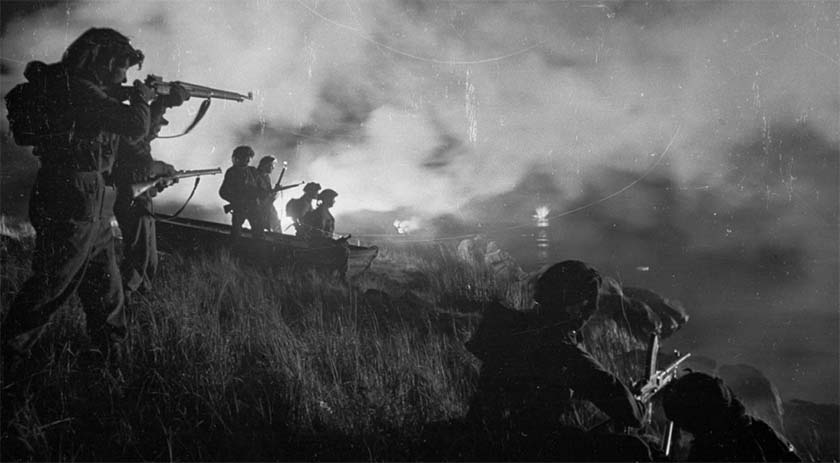
Following the D-Day landings, similar hit-and-run methods were used in Europe—supporting resistance movements and disrupting German logistics.
While the desert raids remained their most iconic operations, the principles behind them continued throughout the war
A Lasting Legacy
The SAS jeep raids redefined what small units could achieve.
Speed. Surprise. Precision.
These ideas became the foundation of modern special forces operations—and are still used today.
And at the heart of these raids was Paddy Mayne:
A man whose leadership turned a simple vehicle into a weapon of war—and helped change the course of the conflict.